 SoCal Garage Door Pros team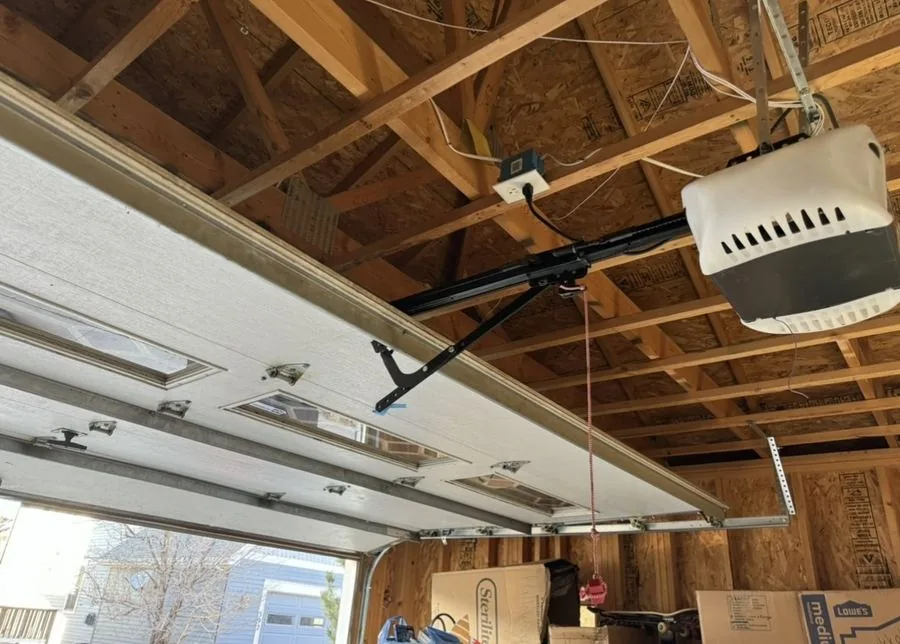
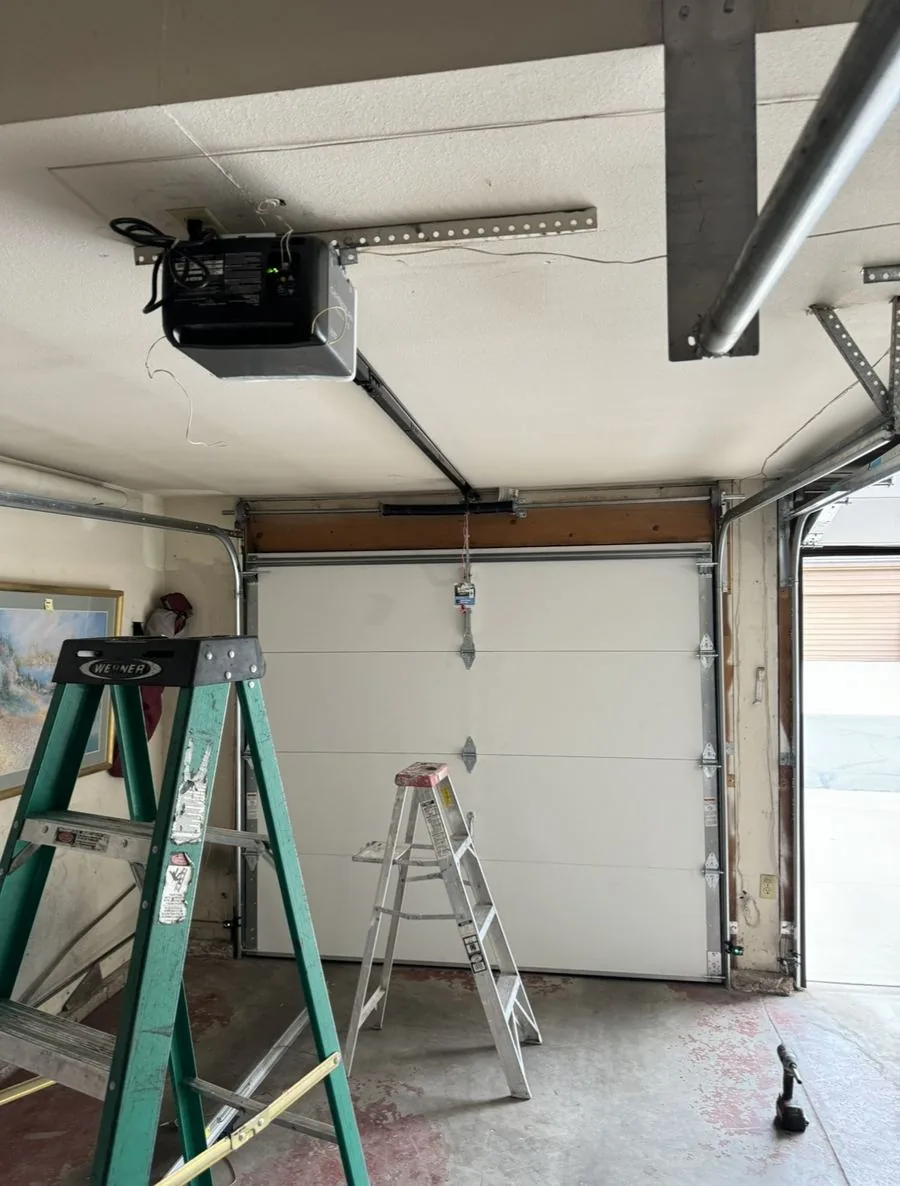
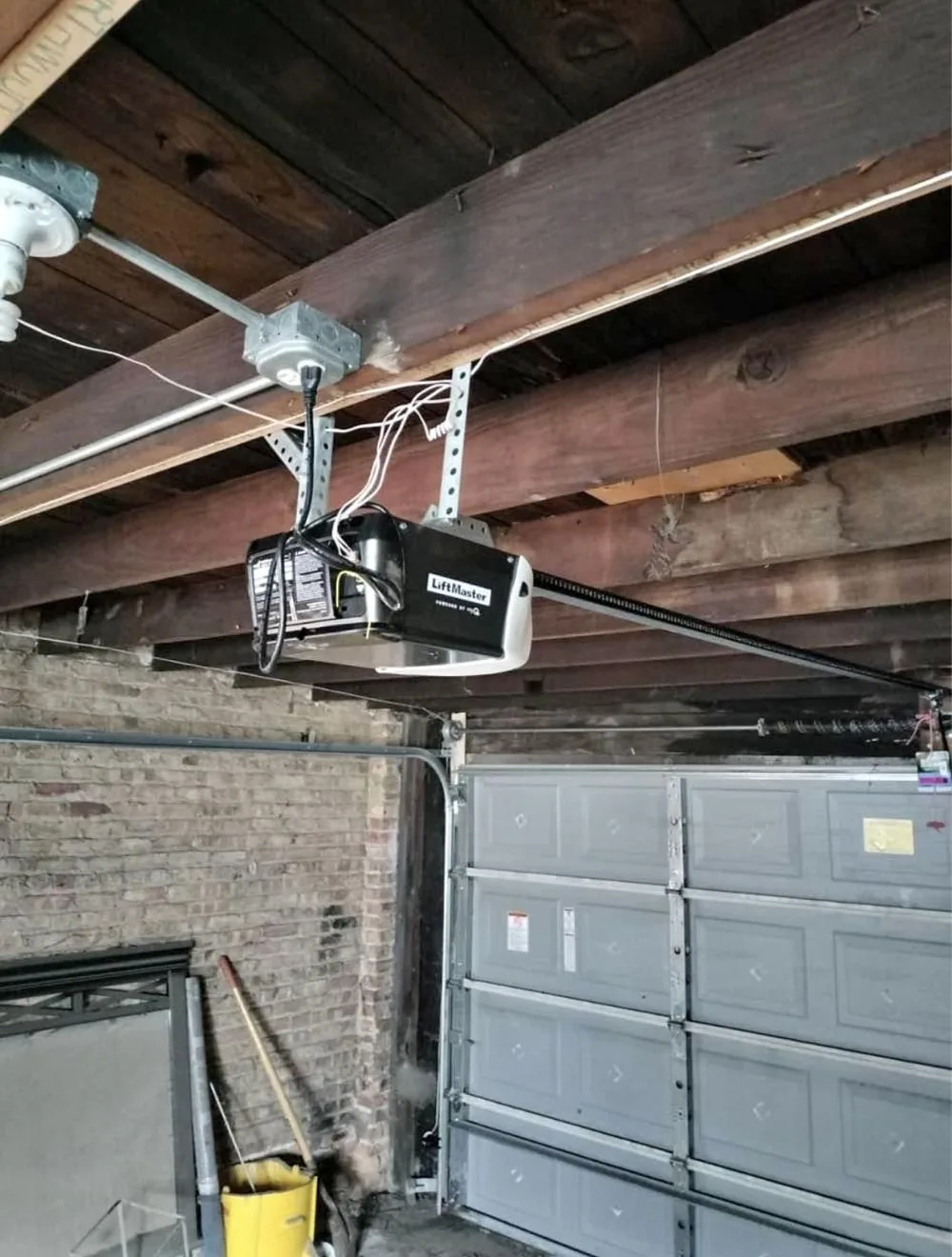
Most garages have the opener motor hanging from the ceiling, with a long rail running back from the door. That's fine for parking a car. It's a problem when you want a squat rack, a pull-up bar or room to press a barbell overhead.
A wall-mount opener, sometimes called a side-mount or jackshaft opener, moves the motor off the ceiling and onto the wall next to the door. The rail goes away completely.
How a wall-mount opener works
A ceiling opener pulls the door along a rail with a chain or belt. A wall-mount unit works differently: it bolts to the wall beside the door and turns the torsion bar, the steel tube the springs sit on above the opening. Turning that bar lifts and lowers the door.
- No rail across the ceiling, and no motor hanging in the middle of the room
- Quieter in most garages, since there's no chain or belt running overhead
- Open ceiling for racks, rigs, hanging storage or a car lift
Can your door take one?
Not every door is a match. Before we recommend a wall-mount unit, we check three things:
- Torsion springs. The opener drives the torsion bar, so a door on side extension springs needs a spring conversion first.
- Wall space beside the door. The unit sits at the end of the bar, so it needs clear wall on one side of the opening.
- Power nearby. An outlet close to where the unit mounts keeps the install clean.
A door that's out of balance should be fixed before any new opener goes on. The opener should only guide the door; the springs do the lifting.
Planning the gym around the door
Taking the opener off the ceiling is only half of it. The door itself still rolls up and sits overhead when it's open, so plan your layout around where the panels and tracks end up.
- Keep tall equipment clear of the horizontal tracks and the open door
- Leave the safety sensors at the bottom of the tracks unblocked, or the door won't close
- Mount pull-up bars and wall rigs away from the springs and the torsion bar
Never hang equipment, bands or straps from the tracks, springs or torsion bar. They're under tension and aren't built to take extra load.
What switching over involves
A conversion means taking out the old ceiling opener, its rail and the mounting hardware, then installing the wall unit on the torsion bar and setting its limits and force. We finish by running the door through full cycles and testing the auto-reverse.
If you're setting up a garage gym in Encino or anywhere else in the San Fernando Valley, we can look at your door and tell you whether a wall-mount opener fits, or what needs to change first. See our opener repair and installation page for the openers we work on.
Frequently asked questions
Is a wall-mount opener the same as a jackshaft opener?
Yes. Side-mount, wall-mount and jackshaft all describe an opener that mounts beside the door and turns the torsion bar instead of pulling the door along a ceiling rail.
Will a wall-mount opener work with extension springs?
No. It needs a torsion spring setup, because it drives the torsion bar. A door on extension springs has to be converted to torsion springs first.
Can I keep my old ceiling opener as a backup?
No. Two openers fighting the same door can damage it. The ceiling unit and rail come out when the wall unit goes in.
Does a wall-mount opener give me more headroom than a ceiling opener?
It clears the motor and rail off the ceiling. The open door still sits overhead on its tracks, so the space directly under the open door stays the same.